
The global steelmaking industry is undergoing a quiet but profound transformation. As demands for high-purity steel intensify, traditional single-element deoxidizers are showing their limitations. At the forefront of this leap is the development of advanced composite deoxidizers. Calcium Silicon (CaSi) has emerged as a pivotal component in this process. Recent research highlights the remarkable synergistic effects when Calcium Silicon is combined with other elements. These findings are redefining the standards of modern steel refining.
The chemistry of deoxidation is fundamentally a battle against oxygen. Dissolved oxygen in molten steel is a nemesis to quality. It leads to detrimental inclusions, porosity, and reduced toughness. For decades, metallurgists relied on ferrosilicon or aluminum as primary deoxidizers. However, the residual byproducts often create their own set of challenges. These inclusion particles can clog continuous casting nozzles. They also act as stress concentrators in the final rolled product. This is where the science of composite deoxidizers enters the fray. These systems leverage Calcium Silicon to alter the nature of inclusions.
The Science of Synergy: Calcium Silicon Interaction Mechanisms
The primary allure of Calcium Silicon lies in calcium's high affinity for oxygen and sulfur. It also possesses the ability to modify inclusion morphology. However, pure calcium is notoriously difficult to handle. It has a low boiling point of approximately 1484°C. Consequently, it vaporizes instantly upon contact with molten steel, leading to low recovery rates. When integrated into a composite system, its behavior changes dramatically.
Recent studies demonstrate that Silicon significantly suppresses the vaporization of calcium. Silicon lowers the activity coefficient of calcium. This allows it to remain in the liquid phase longer and dissolve more effectively. This synergy ensures calcium can scavenge oxygen rather than escaping as vapor.
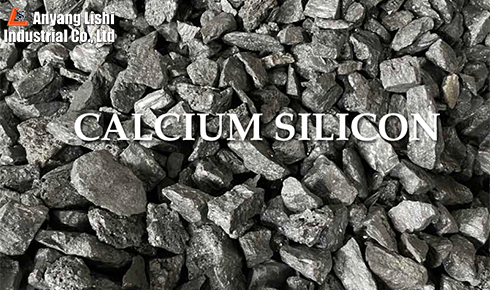
Calcium Silicon-Barium: The Superpower of Inclusion Modification
A significant breakthrough is the combination of Calcium Silicon with Barium (Ba). Barium possesses a stronger deoxidizing capacity than calcium and has a higher density. In a composite CaSi-Ba alloy, the synergistic effect is multifaceted.
Firstly, barium acts as a heavy "carrier." It drives the lighter calcium deeper into the molten steel. This increases the depth of reaction and expands the effective deoxidation zone. Secondly, research indicates that Ca and Ba promote low-melting-point complex inclusions. The composite transforms hard alumina clusters into liquid calcium-aluminates or barium-calcium-silicates. These liquid globules float to the surface more easily. Alternatively, they remain as harmless, spherical particles that do not harm mechanical properties.
Industry consensus suggests this technology represents a paradigm shift. Simple deoxidizers clean the steel but often leave residual "dirt." In contrast, Si-Ca composite alloys allow for the engineering of inclusion morphology. This synergy transforms potentially fatal defects into benign globules. This significantly extends the fatigue life of the final product.
Enhancing Fluidity and Casting Performance
Beyond deoxidation, synergistic effects extend to the castability of the steel. Clogging of submerged entry nozzles (SEN) is a major productivity killer. This clogging is primarily caused by the build-up of solid alumina deposits.
Composite deoxidizers based on Calcium Silicon offer an effective solution. Calcium converts solid alumina into liquid calcium aluminates. These pass smoothly through the nozzle. The synergy here is economic as well as technical. Manufacturers achieve a higher yield of calcium recovery by combining Silicon with Calcium. This reduces overall alloy consumption costs compared to feeding pure calcium wire.
The Role of Rare Earth Synergies
Research is now exploring the synergy between Calcium Silicon and Rare Earth elements. Candidates include Cerium or Lanthanum. Preliminary data suggests that adding trace Rare Earths refines the steel's grain structure. This triple-synergy approach promises to unlock new categories of ultra-high-strength steels. These materials are crucial for the automotive and aerospace sectors.
Environmental and Economic Implications
The development of composite deoxidizers aligns with the global push for Green Steel. Efficient deoxidation means less rework and fewer rejected heats. It also results in lower energy consumption per ton of steel produced. Furthermore, the synergistic effect reduces the total amount of alloy required. This lowers the carbon footprint of the alloying process itself.
The industry is moving toward Industry 4.0. Automated feeding systems and real-time monitoring make precise control possible. Steel plants no longer guess the amount of additive needed. Instead, they calculate the exact stoichiometric balance required. This triggers the desired reaction between Silicon, Calcium, and other elements.
Conclusion
The era of single-element metallurgy is fading. The future lies in sophisticated composite alloy formulations. Here, the whole is greater than the sum of its parts. Calcium Silicon stands as the cornerstone of this new technology. It synergizes effectively with elements like Barium, Aluminum, and Rare Earths. As R&D continues to unlock these potentials, the industry will produce cleaner, stronger materials. These advancements are powered by the invisible but potent chemistry of synergy.